|
|
|
ALGARVE NEWSLETTER
|
|
|
|
|
|
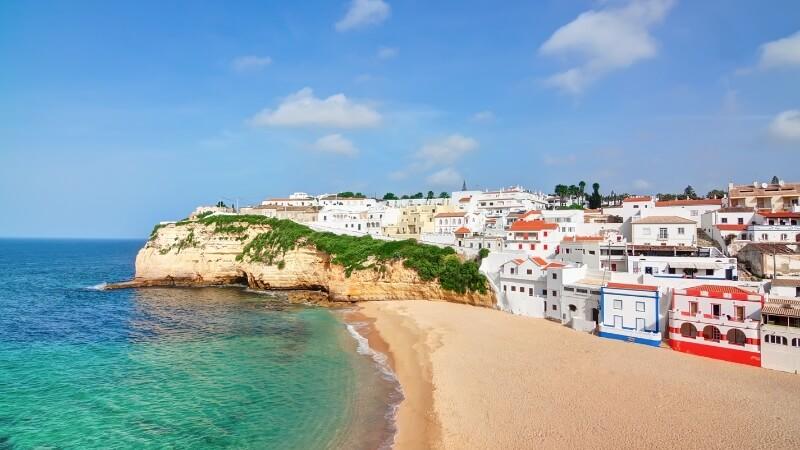
Tomorrow is the 29th of August, and in this part of the country that is not just a date. It is the night everyone goes into the sea. The forecast is holding at 28 or 29 degrees with a light westerly and nothing on the radar, and the water is as warm as it will be all year. Out east a castle is in its final two days of the Middle Ages, and in Lagoa the biggest fair in the Algarve closes on Sunday night. Here is what we would actually do with it.
|
|
|
|
🗺️ THIS WEEKEND AT A GLANCE
|
|
|
|
Festa do Banho 29 · Lagos and Praia da Luz, tomorrow from 11am, free · The whole town builds towards one thing, everyone in the water at midnight, and it has been doing it for generations. Jazz at 7.30pm, the bathing suit contest at 8.30, Tanya & Band at 10.30, then the swim.
Medieval Days · Castelo de Castro Marim, tonight to Sunday, from 3pm · Two nights left of fire breathers, falconry and sword fights inside a border castle. Go after dark, when the torches are lit and the heat has gone.
FATACIL · Lagoa, from 6pm, 5€ · The final weekend. Ten days of cork, honey, livestock and craft halls that turn into a concert ground after dark, and Sunday is the last night of it until next August.
Roots Festival · Alameda da República, Portimão, tomorrow 5pm to 1am, free · Cabo Verde, Guinea-Bissau, Angola, São Tomé and Brazil cooking on the same street, with music and dance from all of them. The best free food in the region this weekend.
Jazz at the Castle · Alcaidaria do Castelo, Loulé, tomorrow 11am, free · An hour of the Algarve Jazz Collective inside the castle walls, in the cool of a Saturday morning, and it costs nothing.
|
|
|
|
✨ PREMIUM PICK OF THE WEEK
|
|
|
Monchique and Fóia: Half-Day Tour
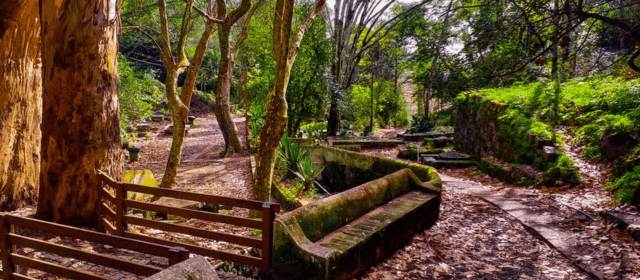
Everything above happens at sea level, in the heat, at night. This is the opposite. Fóia is 902 metres up, the highest point in the Algarve, and the temperature at the top is routinely eight degrees below the coast. On a clear morning you can see from Sagres to the Serra de Monchique's far shoulder, and on some mornings you look down onto cloud sitting in the valleys.
The half day takes you up through the cork oak and eucalyptus, into Caldas de Monchique with its spa buildings and cold spring, then to the summit, with a stop at a local producer for medronho, honey and melosa. It is the one Algarve trip where nobody mentions a beach, and after a week of 29 degrees that is exactly the point.
👉 More Info
|
|
|
|
Igreja de São Lourenço, Almancil: The Church Everyone Drives Past
It sits on a small rise just off the N125 at Almancil, between a tyre place and the turning for Quinta do Lago, and roughly ten thousand cars a day go past without stopping. From outside it is a plain white parish church. Inside, every surface from the floor to the top of the dome is covered in blue and white azulejos, and the effect when the door closes behind you is closer to standing inside a piece of porcelain than being in a building.
The tiles were made in 1730 by Policarpo de Oliveira Bernardes, the best tile painter Portugal had, and eight panels tell the life of São Lourenço across the walls before the story climbs into the cupola. Twenty-five years later the 1755 earthquake flattened almost every church in the Algarve. This one held. Local accounts say five tiles fell. It is the finest baroque interior in the region and it takes twenty minutes.
|
|
|
|
The Dry Orchard: Fig, Almond and Carob
Drive inland this week and you will pass field after field of trees planted in no obvious pattern, most of them looking half neglected, none of them irrigated. That is not neglect. It is the pomar de sequeiro, the dry orchard, and for close to a thousand years it was the economy of the Algarve. Three trees, no water, poor limestone soil, and a harvest calendar that fills the whole late summer: carob beaten from the branches with long poles from the end of July, almonds cracked out of their split green husks through August, and figs picked from mid-August until the end of September, each one twisted off by the foot when it is almost too ripe to hold.
All three arrived with the Moors, and all three were built to survive a summer with no rain. The figs were the cash crop. Dried on reed mats in the sun, packed into rounds and boxes, they went out of Faro and Portimão to northern Europe by the shipload, and the figos cheios, split, filled with an almond and closed again, are still made in kitchens across the region every autumn. The carob was the throwaway one, animal feed, until the food industry discovered that its gum thickens everything from ice cream to yoghurt and the pods became worth more than the almonds. Its seeds are so uniform in weight that jewellers once used them to weigh gold, which is where the word carat comes from.
You can see all of it condensed into one hall at FATACIL this weekend, in Lagoa, where the producers set up with their dried figs, their almond cakes, their carob flour and their medronho. But the better version is the roadside, right now. Stop where someone has a table out under a tree between Loulé and Salir, and buy the figs from whoever picked them that morning.
|
|
|
|
|
This space is reserved for community highlights and local businesses we love. Are you a maker, host, restaurant or small business in the Algarve? Reply to this email to feature here.
|
|
|
|
|